
Chess Analysis: How to Review Games and Find Better Moves
Learn chess analysis step by step: review games, use Stockfish correctly, find better moves, and turn mistakes into practical training.
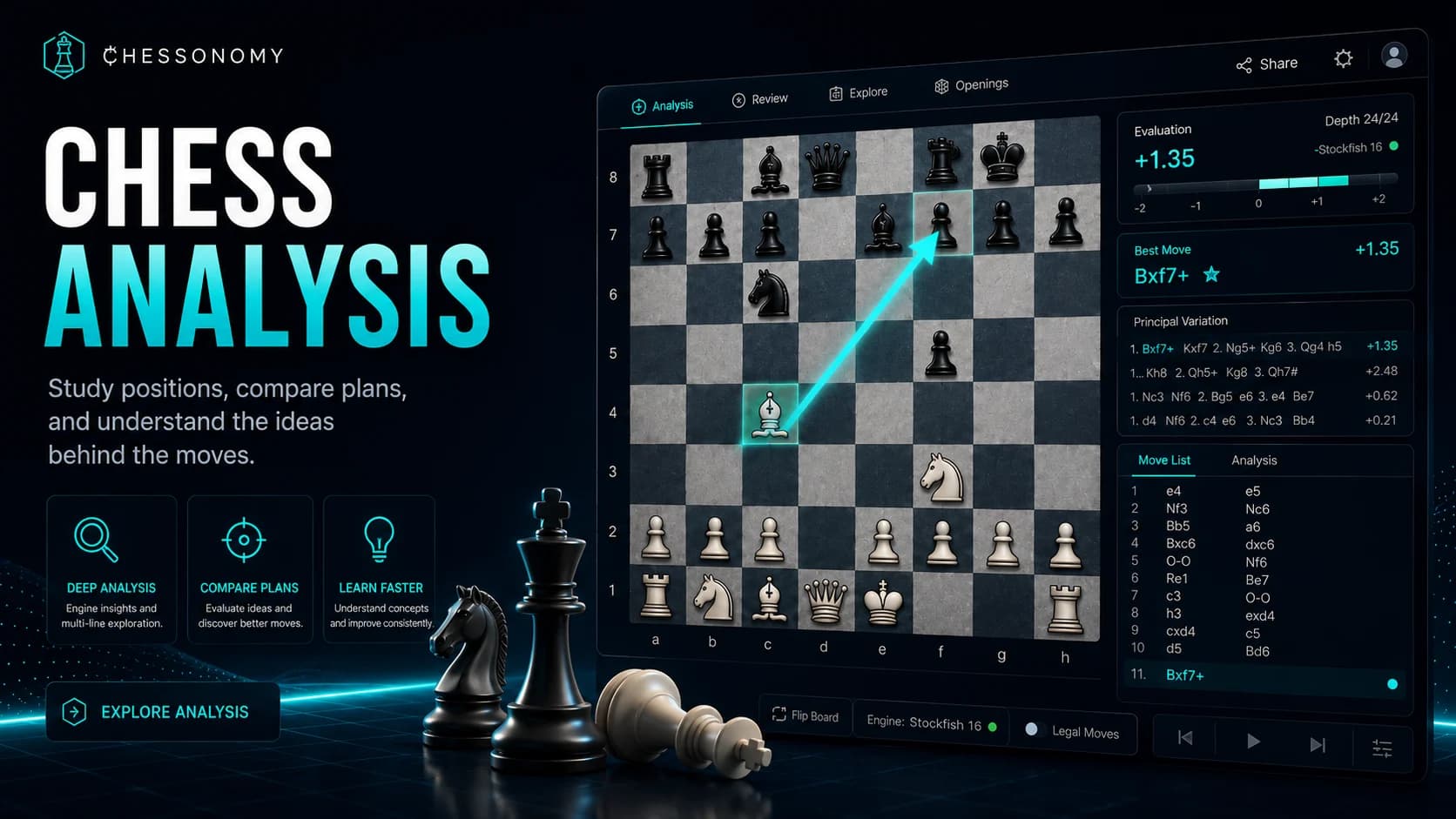
Chess analysis is not just checking engine scores. The best review process explains why a move worked, what changed in the position, and what to train next.
- Turning the engine on immediately and never recording your own candidate moves.
- Trying to analyze every move with equal effort instead of finding critical moments.
- Copying the top engine line without explaining the human idea behind it.
- Ignoring inaccuracies because only blunders feel important.
- We explain chess analysis as a repeatable review workflow, not as passive engine watching.
- We separate human candidate moves, engine verification, opening review, tactical mistakes, strategic plans, and training follow-up.
- We include practical examples, FEN positions, and tool links so readers can test the process on their own games.
Most players use chess analysis too late and too passively. They finish a game, open an engine, see a few red labels, and move on. That feels like review, but it usually does not change the next game. A player may learn that move 18 was a mistake, but not why the mistake was tempting, what they missed, or how to recognize the same pattern again. Good analysis has to go further than naming the error.
Start with the moment you found difficult, even if the engine later says your move was fine. What did you think your opponent threatened? Which reply did you calculate? Compare that account with the moves on the board. A useful review can reveal a missed defensive resource, an unnecessary trade, or a plan that no longer fits the pawn structure. The evaluation helps you locate the problem; your notes should explain the decision.
If you want chess analysis to improve your rating, treat it as a loop. First, review the game without the engine. Second, mark the moments where you were unsure. Third, use Stockfish to test your candidate moves. Fourth, translate the best line into human language. Fifth, turn the pattern into training. That loop is slower than clicking through a report, but it produces memory, judgment, and better decisions under time pressure.
What Chess Analysis Really Means
Chess analysis means answering one practical question: what was the position asking for? Sometimes the answer is tactical. A piece is loose, a king is exposed, or a defender is overloaded. Sometimes the answer is strategic. A pawn break must be prepared, a bad piece needs improvement, or an endgame transition favors one side. Sometimes the answer is psychological. You played too fast because the move looked natural, even though the position had changed.
A useful analysis session does not try to explain every legal move. It focuses on decisions. Where did the evaluation change? Where did one side miss a forcing line? Where did the plan stop matching the pawn structure? Where did a trade help the opponent? These are the moments that matter because they reveal the habits behind your results. The best players are not analyzing to admire perfect engine chess. They are analyzing to repair decisions.
This is also why chess analysis should include both full games and single positions. A full game shows the story: opening choices, recurring plans, time-pressure mistakes, and endgame handling. A single-position analysis goes deeper: candidate moves, calculation trees, and tactical details. If you only analyze full games, you may skim past the critical position. If you only analyze positions, you may miss the habit that created them.
The Best Chess Analysis Workflow
The best workflow begins before the engine is switched on. Replay the game once from your own point of view. Mark every move where you had a real choice, every move where you felt uncomfortable, and every move where the result changed emotionally. Do not judge yet. Just mark. These moments are often more valuable than the largest engine swing because they show what you were thinking during the game.
After that first pass, choose three to five critical positions. A critical position is not always a blunder. It can be the moment when you chose the wrong plan, traded the wrong piece, ignored a pawn break, or missed the chance to simplify into a better ending. If you review every move with equal attention, the lesson becomes diluted. If you focus on the critical positions, the game becomes teachable.
Only then should the engine become the judge. Put each critical position on the board and list two or three candidate moves before looking at the best move. This step is uncomfortable because it exposes your real thinking. That is the point. If your candidate moves never include the engine's top idea, you have found a blind spot. If your candidate move is close but the move order is wrong, you have found a calculation issue. If your move is strategically wrong, you have found a planning issue.
| Step | Question | Output |
|---|---|---|
| Replay without engine | Where did I feel unsure or make a real decision? | A short list of critical moments. |
| List candidates | What moves would I seriously consider now? | Two or three human candidate moves. |
| Check with engine | What does Stockfish prefer and what does it reject? | Best move, evaluation change, and main line. |
| Translate the line | Why does the best move work in human terms? | Threat, pawn break, trade, tactic, or endgame reason. |
| Create training | What should I practice so this mistake does not repeat? | Puzzle theme, opening note, endgame drill, or checklist item. |
Why Engine Analysis Alone Is Not Enough
Stockfish can tell you that one move is better than another, but it does not automatically teach you how to choose that move in a real game. The engine sees tactics and evaluations at a level humans cannot match. That is useful. It is also easy to misuse. If you only look at the top line and nod, you may leave with a move you cannot reproduce and an explanation you do not understand.
A common example is the quiet engine move. The best move may simply improve a knight, step out of a tactic, or prepare a pawn break. To a human, it can look slow. If you do not translate the move, you will forget it. The correct question is not only what did Stockfish play. The better question is what problem did the move solve? Did it stop counterplay? Did it create a threat? Did it improve the worst piece? Did it make the opponent's plan fail?
Another common example is the engine sacrifice. A move may be marked best because of a forcing line ten moves deep. If you cannot calculate the key branch or understand the compensation, playing that kind of move in a real game may be unrealistic. Analysis should respect truth, but it should also build practical judgment. Sometimes your training goal is not to memorize the sacrifice. It is to recognize the tactical pattern that made the sacrifice possible.
How to Analyze a Blunder
A blunder is not a lesson by itself. The lesson is the reason behind the blunder. Did you miss a check, capture, or threat? Did you move a defender away from a critical square? Did you assume the opponent had to recapture? Did you play a move because it looked active while your king was unsafe? A useful blunder review should name the pattern, not only the move number.
Start by reconstructing your thought process. What did you think your move achieved? What reply did you expect? What reply did you miss? Then compare that expectation with the engine line. This is where chess analysis becomes personal. Two players can make the same blunder for different reasons. One missed a knight fork. Another misjudged an endgame. Another moved too fast because the position looked familiar. The training fix is different for each player.
After you find the reason, create a small rule. For example: before moving a pinned piece, check what it was defending. Before accepting a sacrifice, check the forcing checks. Before trading queens, evaluate the pawn ending. Before pushing a flank pawn, ask whether the center can open. These rules sound simple, but they turn analysis into a practical checklist. The next game will not give you the same position. It may give you the same decision pattern.
How to Analyze an Inaccuracy
Inaccuracies are often more useful than blunders because they show the small decisions that shape a game. A blunder may be obvious once the tactic appears. An inaccuracy can be harder to understand. The engine may prefer a move that improves a piece, delays a capture, or changes the pawn structure. If you ignore these moments, you miss the kind of improvement that separates stable players from inconsistent ones.
When a move is labeled inaccurate, do not immediately ask how bad was it. Ask what was better about the alternative. Did the engine move create a threat your move did not create? Did it avoid giving the opponent a tempo? Did it keep tension? Did it prevent a freeing pawn break? The answer often reveals a positional habit. Many players release tension too early, trade active pieces, push pawns without need, or choose a plan before finishing development.
A good inaccuracy note is short and specific. Instead of writing bad move, write released central tension too early or traded my active bishop for a passive knight. That note can be remembered. It also creates a search phrase for your own game database. If the same note appears five times, you have found a real weakness. Chess analysis becomes powerful when it reveals repeated behavior.
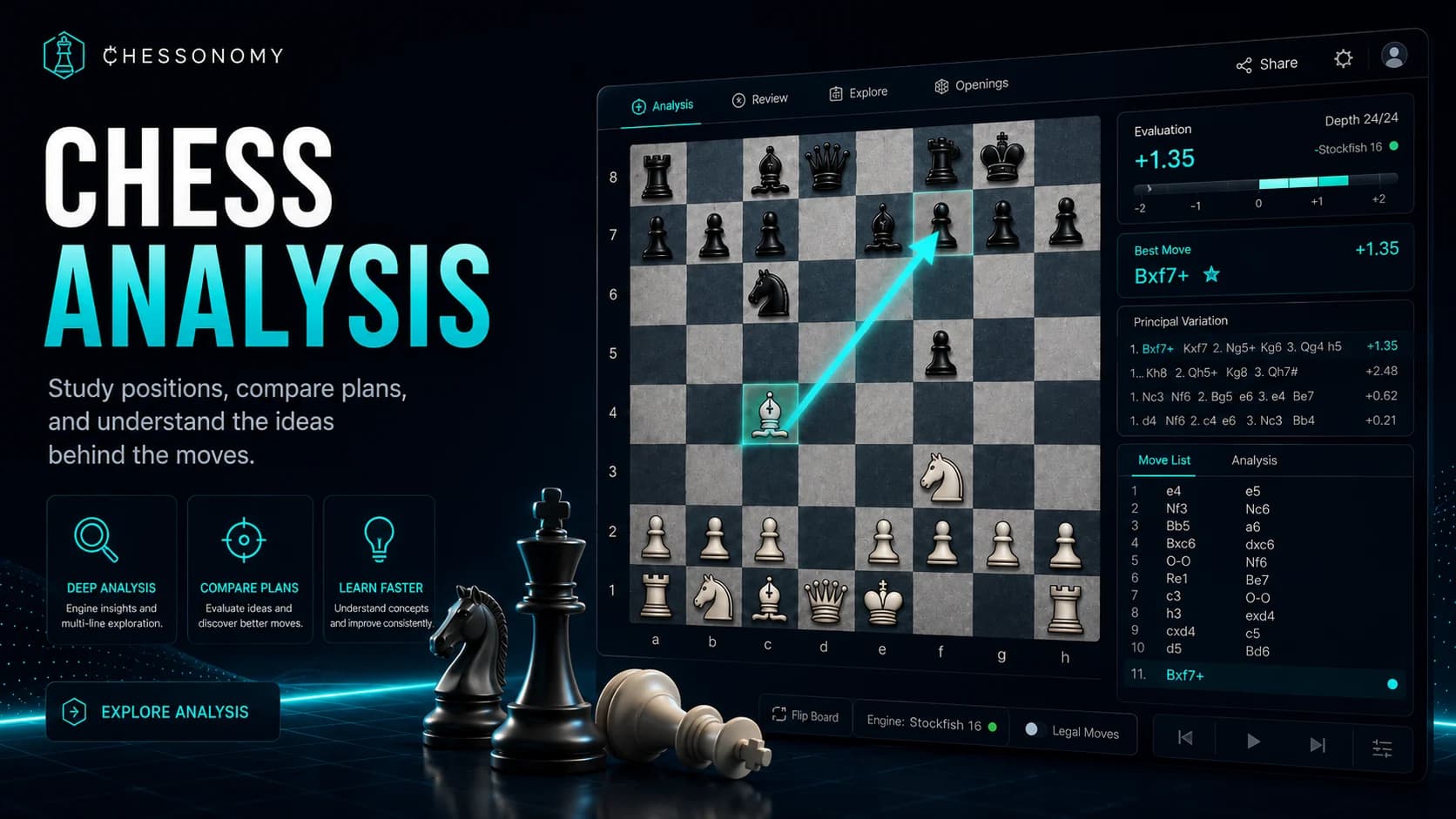
Opening Analysis: What to Review After the Game
Opening analysis should not become a database contest. The goal is to find where your understanding stopped. If you lost because you forgot a move on turn eight but the resulting position was still playable, the opening was not the real problem. If you reached move twelve with no plan, misplaced pieces, and a weak center, then the opening needs work. The difference matters because memorization is not the same as preparation.
In every opening review, identify the first unfamiliar position. Then ask three questions. What is my pawn structure asking for? Which piece is worst? What is the opponent's main break or threat? These questions work in almost every opening. In the Caro-Kann, you may watch c5. In the Sicilian, you may watch d5 or kingside attacks. In queen pawn openings, you may watch e4, c4, or minority attacks. The exact move changes, but the analysis habit stays the same.
After that, update your repertoire note with one sentence, not a whole chapter. For example: against this setup, do not trade the dark-squared bishop before Black weakens the kingside. Or: after Black plays early c5, decide between dxc5 and c3 before developing the queen's knight. Short notes are easier to use before a game. Long notes often become archives that nobody reads.
Middlegame Analysis: Find the Plan, Not Just the Move
The middlegame is where chess analysis becomes most valuable because there are fewer forced answers. A tactic may decide the game, but the tactic often appears because one side had a better plan. When reviewing the middlegame, ask how the pieces changed over time. Which piece improved? Which piece became passive? Which pawn break was prepared? Which trade changed the character of the position?
A practical method is to pause every five moves and evaluate the position in words. King safety, material, pawn structure, piece activity, open files, weak squares, and immediate threats. You do not need a grandmaster essay. You need a clear snapshot. If your snapshot before the mistake was wrong, the mistake makes sense. You were playing from a false picture of the board.
Engine analysis helps here by showing which plan actually worked. Maybe the engine wanted a pawn break you never considered. Maybe it wanted a rook lift instead of a queen move. Maybe it wanted a trade because your attacking chances were gone and the endgame was favorable. The important step is to name the plan in human language. Without that translation, the line remains a collection of moves.
Endgame Analysis: Check the Transition
Many players analyze openings and tactics but skip endgames. That is a mistake. Endgame analysis often reveals the most honest chess habits because there is less noise. Did you trade into a pawn ending without calculating? Did you activate your king too late? Did you put the rook behind the wrong pawn? Did you defend passively when active counterplay was available? These questions are concrete and trainable.
The key endgame moment is usually the transition, not the final blunder. A player may lose on move fifty, but the real decision happened on move thirty-five when queens were traded. During analysis, go back to the last major trade. Ask whether you understood the resulting endgame before entering it. If the answer is no, that is your lesson. Do not trade into endings by mood. Trade into endings by evaluation.
Use the engine carefully in endgames. Tablebase-perfect positions are absolute when seven pieces or fewer remain, but practical endings with more pieces still require human plans. The engine may defend perfectly, but your opponent may not. The goal is to learn principles and critical techniques: opposition, outside passed pawns, rook activity, active king, blockade, and pawn races. Endgame analysis should create technique, not only regret.
A Realistic Example Position
Consider this common middlegame FEN: r2q1rk1/pp2bppp/2n1pn2/3p4/3P4/2PBPN2/PP3PPP/R1BQ1RK1 w - - 0 10. White to move. A quick player might choose Re1 because it looks natural, or Nbd2 because development feels automatic. Good chess analysis asks what the position is really about. White has a solid center, Black has played ...d5, and the important question is whether White can challenge the center or improve the worst piece before Black finishes comfortably.
Before checking an engine, list candidates such as e4, Nbd2, Re1, and b3. Then inspect consequences. If White plays e4, what happens after dxe4? If White plays Nbd2, is the knight headed to f3, b3, or c4? If White plays Re1, what threat is created? The value of the exercise is not that this exact position must appear in your games. The value is the habit of asking whether a natural move has a concrete purpose.
When you finally turn on the engine, compare its top move with your candidate list. If the engine move was not on your list, ask why. Was it a pawn break? A quiet improvement? A tactical resource? This one question turns a random engine line into a training result. The next time you see a similar center, you may remember to look for the same idea before playing the automatic developing move.
How to Use Move Labels Correctly
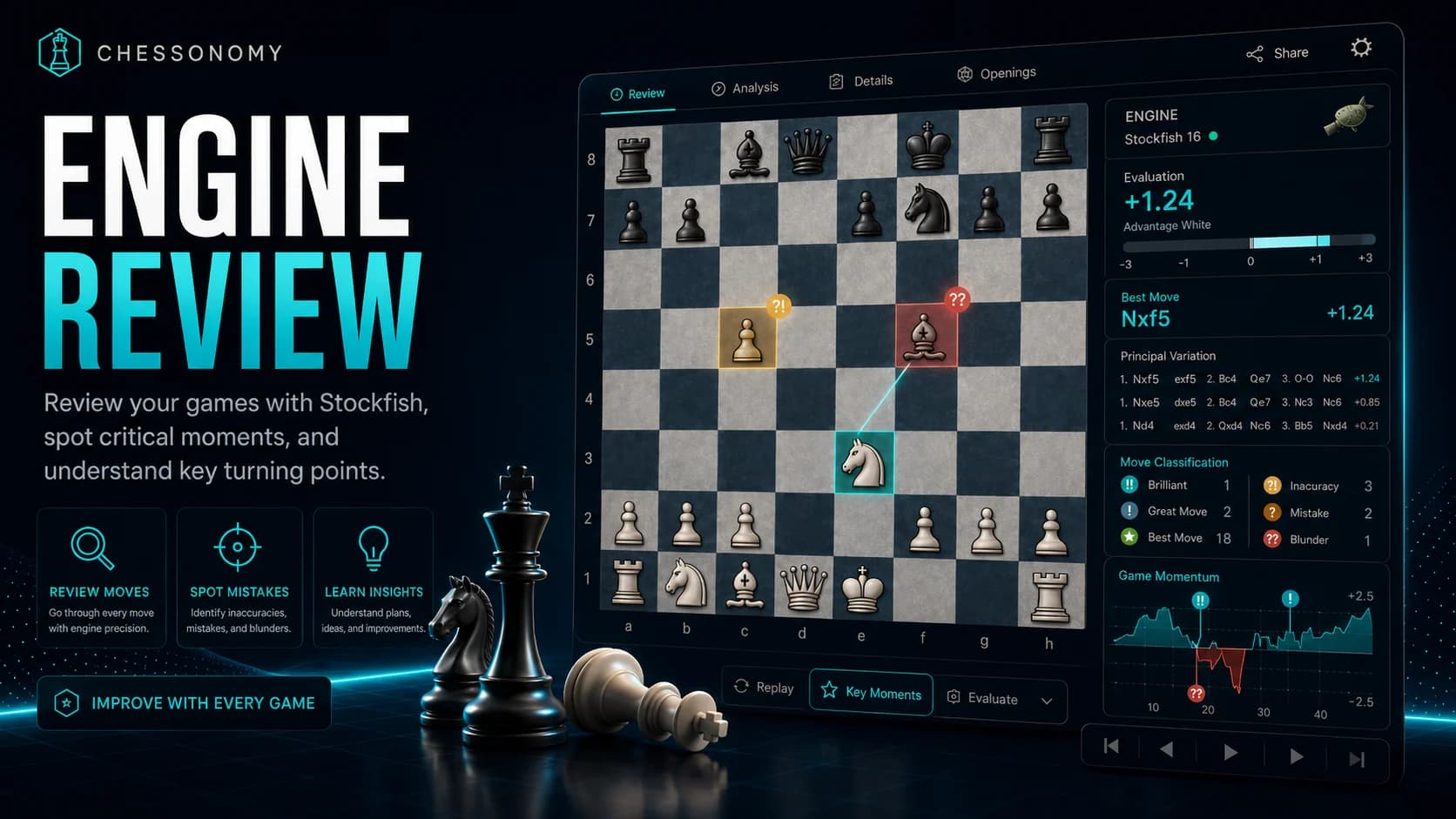
Move labels such as best, excellent, good, inaccuracy, mistake, and blunder can make game review easier to scan. They can also create bad habits if you treat them as the lesson. A best move label does not mean you understood the move. A blunder label does not explain why the move happened. Labels are useful signposts. They are not the analysis itself.
When a move is labeled best, ask whether you would find it again. If yes, write down the reason. If no, study the candidate moves that made it hard. When a move is labeled mistake, ask whether the mistake was tactical, strategic, or practical. Tactical mistakes require pattern training. Strategic mistakes require model games and pawn-structure study. Practical mistakes require time management, candidate discipline, and better checklists.
This is especially important for brilliant moves. A move may receive a special label because it sacrifices material and remains engine-approved. That does not mean every sacrifice is brilliant, and it does not mean the move was easy to justify during the game. The useful question is what made the sacrifice work. Was the king trapped? Was a defender overloaded? Was the material recovered by force? That explanation is the training value.
How Long Should Chess Analysis Take?
A normal game does not need a two-hour review every time. For most players, a useful analysis session can take twenty to forty minutes. Spend five minutes replaying without the engine, ten minutes on critical positions, ten minutes with engine verification, and five minutes writing training notes. Longer reviews are useful for tournament games, opening preparation, or games where one recurring weakness is obvious.
Blitz games need a different approach. Do not deeply analyze every blitz game. Instead, review a batch and look for repeated patterns. Are you losing the same opening structure? Missing the same back-rank tactic? Trading into bad endgames? Blitz analysis is best used to find trends. Classical and rapid games are better for deep position-by-position review because the decisions usually had more thought behind them.
The best schedule is consistent and realistic. Analyze one serious game deeply each week. Review a few fast games for patterns. Save critical positions. Turn mistakes into puzzles or checklist notes. This is enough to improve if the work is honest. The problem is rarely that players need more engine lines. The problem is that they need to convert analysis into behavior.
Common Chess Analysis Mistakes
- Turning the engine on immediately and never recording your own candidate moves.
- Trying to analyze every move with equal effort instead of finding critical moments.
- Copying the top engine line without explaining the human idea behind it.
- Ignoring inaccuracies because only blunders feel important.
- Studying openings without identifying the first position you did not understand.
- Reviewing a game but creating no training action afterward.
The last mistake is the most damaging. If a review ends with no action, the lesson fades. Every serious analysis session should produce one next step. It might be solve ten back-rank tactics, study rook activity in endgames, update a Caro-Kann note, practice candidate moves in quiet middlegames, or stop blitzing an opening you do not understand. The action does not have to be large. It has to be specific.
A Production-Ready Chess Analysis Checklist
Use this checklist after any serious game. First, write the result and time control. Second, mark the opening and the first unfamiliar position. Third, identify three critical moments. Fourth, list your candidate moves at each moment before using the engine. Fifth, compare your candidates with Stockfish. Sixth, translate the best move into words. Seventh, write one training task. This structure keeps analysis focused and prevents the session from becoming random engine browsing.
A good note might look like this: move 17, I played Qd2 because I wanted to connect rooks, but I missed ...Ne4 because the knight was protected by the bishop. Pattern: queen move ignored a central knight jump. Training: solve knight-outpost tactics and add a pre-move check for opponent forcing moves. That note is much better than move 17 mistake. It tells future you what to fix.
Over time, these notes become your personal chess curriculum. If your notes repeatedly mention missed pawn breaks, study pawn structures. If they repeatedly mention loose pieces, train tactics. If they repeatedly mention trading into bad endings, study endgame transitions. This is how chess analysis becomes individualized. You stop copying generic advice and start training the problems that actually cost you points.
How Chessonomy Fits Into the Workflow
Chessonomy is built around the idea that analysis should lead to action. Use game review when you want the full story of a PGN, Chess.com game, or Lichess game. Use the analysis board when one FEN deserves deeper attention. Use the next-move tool when you want to test a single critical position. Use puzzles when the review reveals a tactical theme you need to train. Each tool should answer one part of the analysis loop.
This matters for user experience and for learning. Many chess tools stop at the engine line. The player still has to decide what to do with it. A stronger workflow guides the player from result to reason to practice. If the engine says your move was bad because of a tactic, train the tactic. If the engine says your plan was slow because of a pawn break, study that structure. If the engine says the ending was drawn but you lost it, practice the technique.
Finish by saving one position and writing one useful sentence about it. For example: I traded the defender before checking whether my back rank was safe. That sentence tells you what to notice next time. A page of engine variations is harder to remember unless you can connect each line to a decision you actually faced. Revisit the saved position a few days later and try to find the move without your notes.
Keep the original position as well as the position after your mistake. Solving only the second position can train damage control while leaving the earlier decision unexplained. On your next review, start one move before the error, name the threat, and compare two alternatives. Check whether either avoids the problem without creating a new one. That small exercise turns a move label into a decision you can recognize during play.
What to Save After Each Analysis Session
Do not save everything. Save the few items that will change future decisions. A strong analysis note usually contains the critical position, the move you played, the better move, the reason the better move works, and the training action. That is enough. If your notes become too long, you will stop reviewing them. If they are too vague, they will not help. The best notes are short enough to revisit and specific enough to guide practice.
A useful saved position should also have a label. Examples include missed forcing move, wrong trade, weak back rank, bad pawn break, passive rook, opening confusion, or winning endgame technique. These labels turn isolated games into patterns. After ten or twenty reviews, you can count the labels and see what actually costs you points. That is much more reliable than guessing your weakness based on one painful loss.
If you use screenshots or diagrams, keep them tied to a purpose. A board image without a note is just decoration. A board image with the candidate moves, engine best move, and one sentence of explanation becomes a training asset. This is why every serious chess analysis workflow should connect visuals, text, and follow-up practice instead of treating them as separate pieces.
Final Takeaway
Chess analysis should make your next game better, not only make your last game look worse. The engine is a powerful judge, but your improvement comes from the translation: why the move worked, what changed in the position, what you missed, and what you will train next. If you build that habit, every serious game becomes useful even when the result was disappointing.
Start small. Analyze one game this week with the five-step workflow: replay without engine, mark critical moments, list candidate moves, verify with Stockfish, and create one training action. That is enough to turn chess analysis from a report into a practice system. Over months, the repeated notes will show your real weaknesses and your real progress. That is the kind of analysis that changes results.
A Simple Chess Analysis Note Template
A useful analysis note should be short enough to review before your next game. Start with the position or move number, then write what you believed during the game. That first sentence preserves the human context the engine cannot recover. You may have thought the position was safe, believed a trade favored you, or assumed the opponent had no active plan.
Next, write the critical fact you missed. Keep it concrete: the e-file opened with tempo, the knight had no retreat square, the rook ending was lost because the king was cut off, or the pawn break changed the center before development was complete. Then write the best practical alternative and why it solves the problem. You rarely need a ten-move engine line in the final note.
- Game belief: what you thought was true before the move.
- Critical fact: the tactical or positional detail you missed.
- Better decision: the move or plan that addressed the position.
- Training action: the puzzle theme, endgame, or opening structure to revisit.
Finish with one training action. If the error was tactical, save the position and solve it again later. If it was strategic, find two more games with the same pawn structure. If it was an opening problem, record the position where understanding ended rather than memorizing a longer move list. The note should point toward practice, not merely document disappointment.
This template also makes progress easier to see. After ten reviewed games, recurring facts begin to appear. You may repeatedly miss backward moves, underestimate passed pawns, or attack before completing development. Those patterns are more valuable than a single accuracy score because they tell you what your next month of study should contain. The strongest conclusion is a specific habit you can test in the very next game.
Chessonomy is an independent chess training workspace focused on practical game review, Stockfish analysis, puzzle training, and player-friendly explanations of engine feedback.
Questions Players Ask
What is chess analysis?
Chess analysis is the process of reviewing a position or game to understand candidate moves, threats, tactical resources, plans, mistakes, and better alternatives. Engine evaluation helps, but strong analysis also explains the human reason behind each move.
What is the best way to analyze a chess game?
The best way is to replay the game without an engine, mark critical moments, list your candidate moves, check them with Stockfish, translate the best line into human language, and create one training action from the review.
Should I use Stockfish for chess analysis?
Yes, Stockfish is very useful for chess analysis, but it should be used after you record your own candidate moves. That way the engine shows the gap between your thinking and the strongest continuation.
How long should I spend analyzing a chess game?
For most serious games, twenty to forty minutes is enough. Spend the time on critical positions rather than every move. Tournament games and recurring weaknesses may deserve deeper review.
Can chess analysis help beginners?
Yes. Beginners should focus on simple analysis questions: what was attacked, what was undefended, what checks and captures existed, and what mistake repeated. The goal is not perfect engine play. The goal is fewer repeated errors.