Chess Analysis: How to Review Games and Find Better Moves
Chess analysis is not just checking engine scores. The best review process explains why a move worked, what changed in the position, and what to train next.
ChessonomyPractical guides on analysis, tactics, openings, and deliberate practice.
Practical explanations of move labels, critical positions, brilliant moves, mistakes, and how to turn your own games into training material.
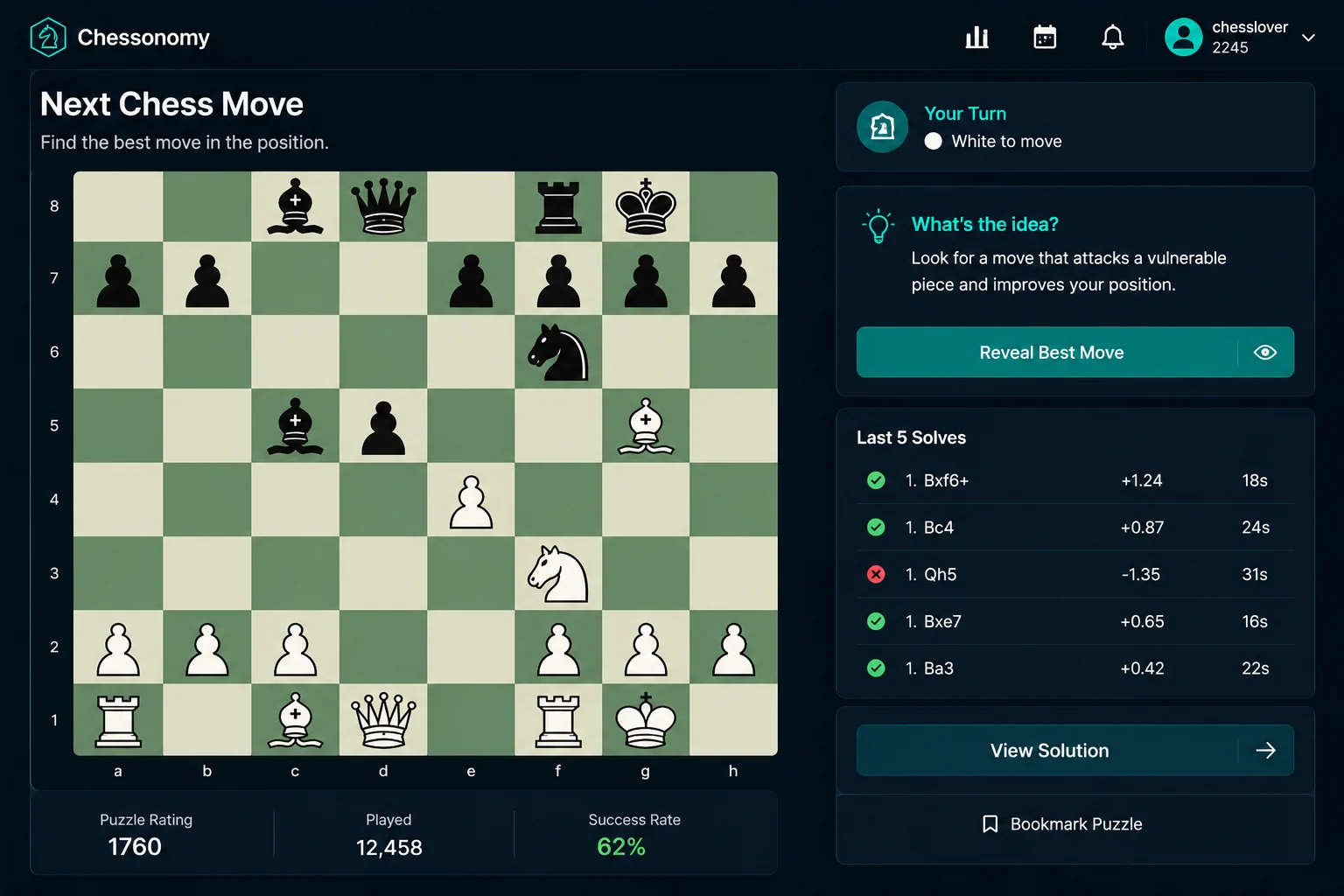
Guides for using Stockfish, FEN, PGN, next-move calculation, and analysis-board workflows without losing the human reason behind each move.
Tactical training, puzzle routines, rating improvement, calculation habits, and study plans built for players who want repeatable progress.
Chessonomy product notes, new training features, workflow changes, and improvements to the study lab as the platform evolves.

Chess analysis is not just checking engine scores. The best review process explains why a move worked, what changed in the position, and what to train next.

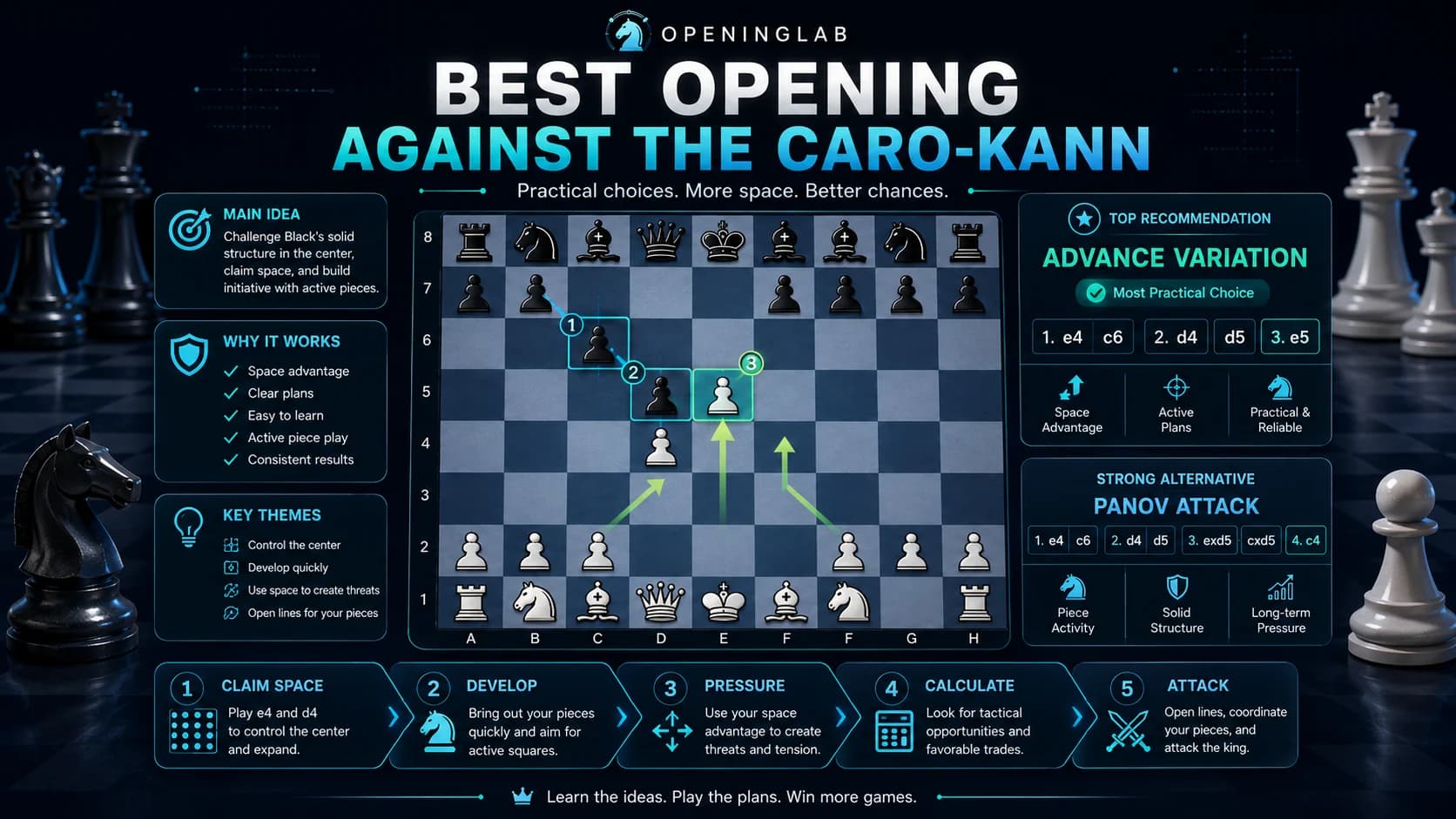
The best practical opening against the Caro-Kann is the Advance Variation. It gives White space, clear plans, and positions where understanding matters more than memorizing engine files.

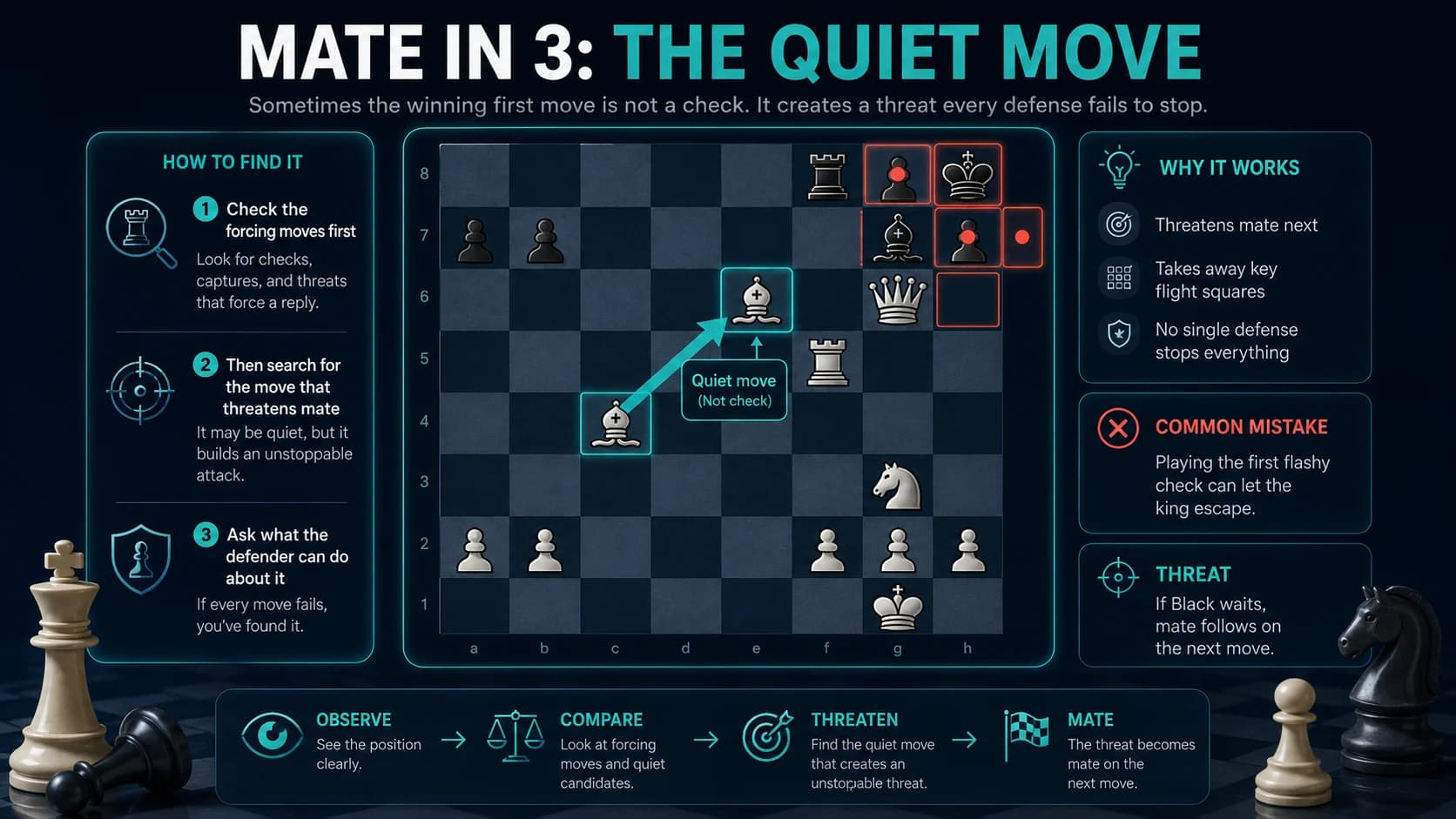
Mate in 3 puzzles teach calculation, forcing moves, and pattern recognition. The key is finding a first move that controls every defense.

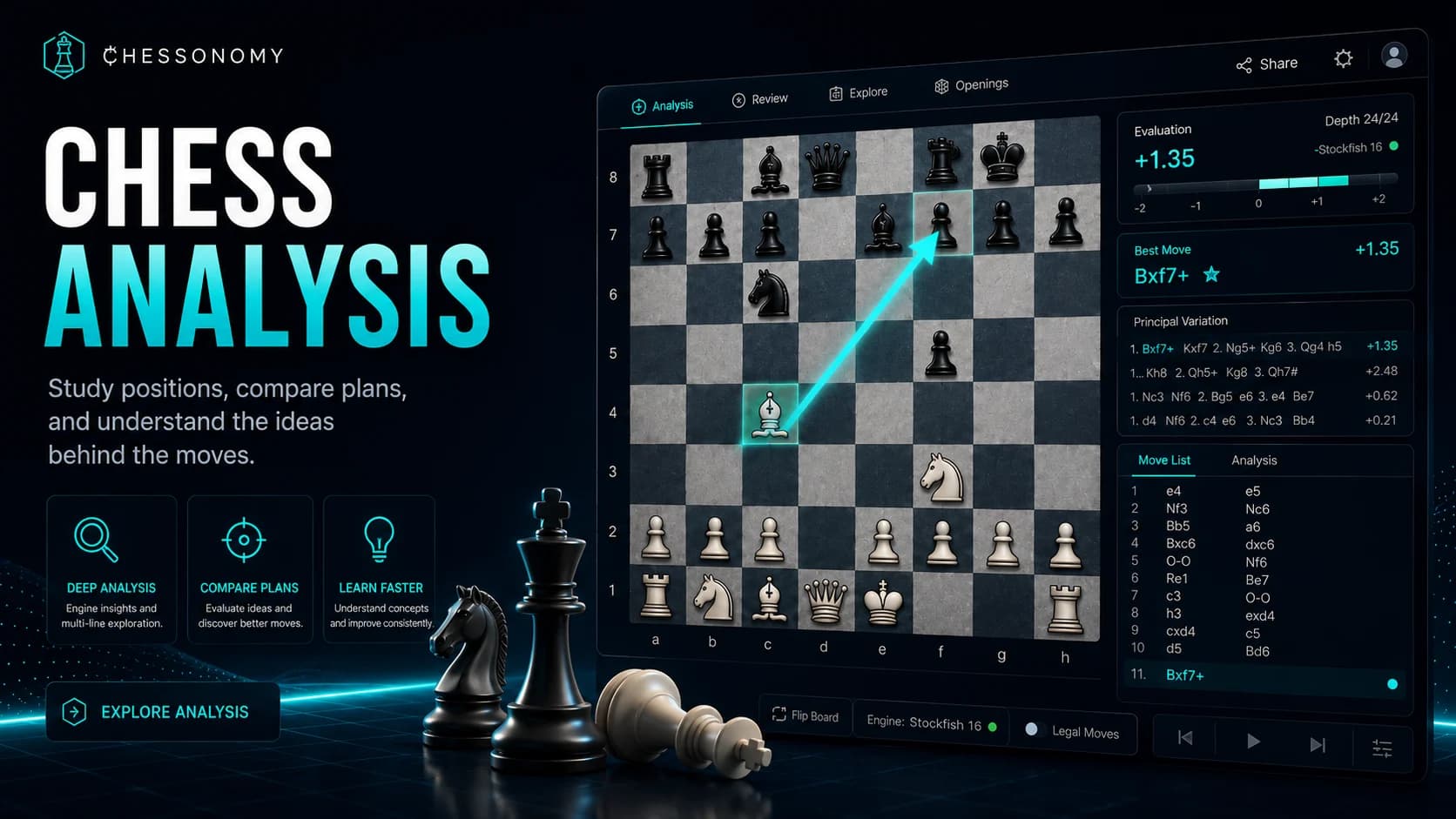
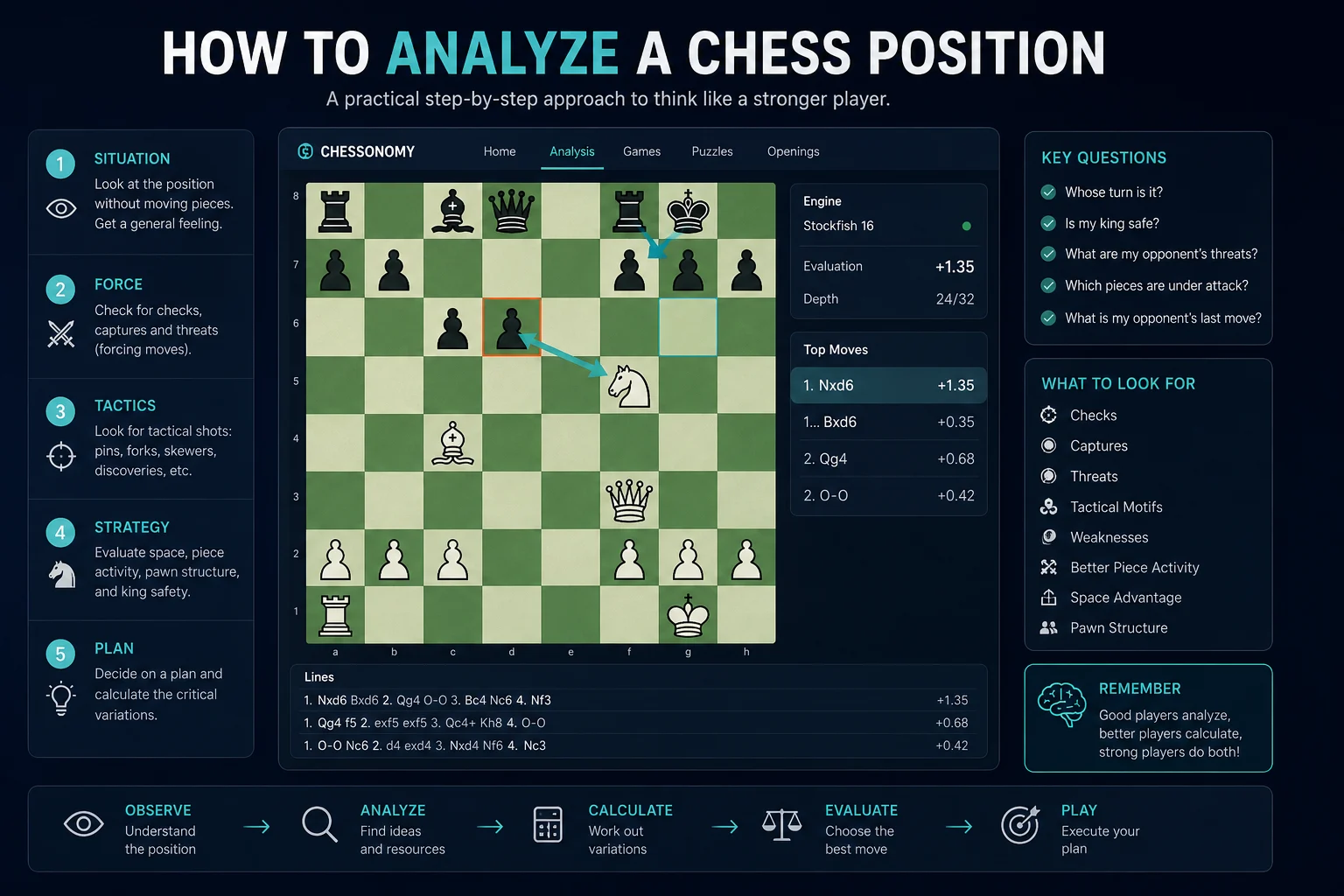
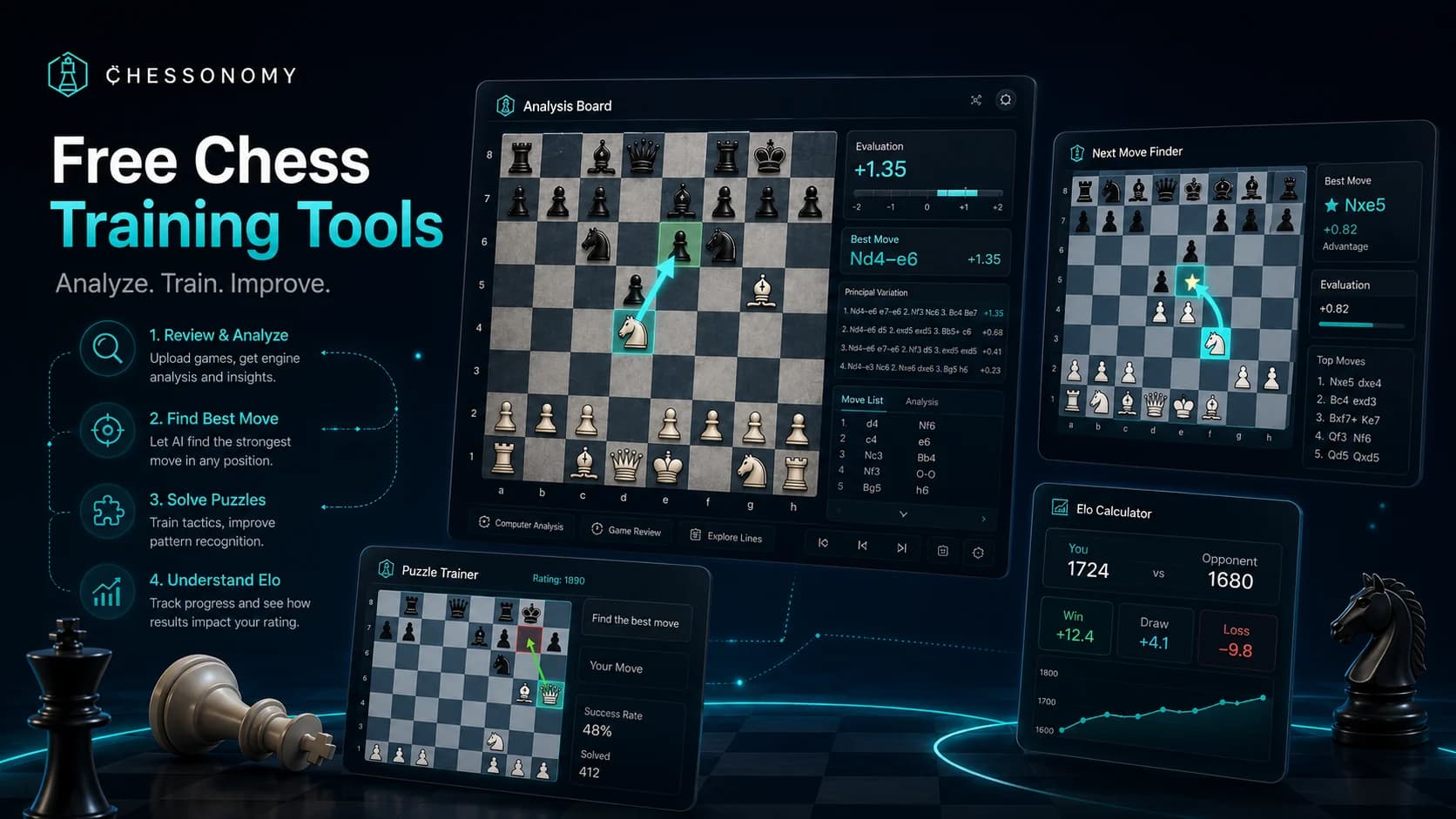
Strong analysis is not just reading the engine's top move. Use Stockfish as a second opinion after you understand threats, candidates, and plans.

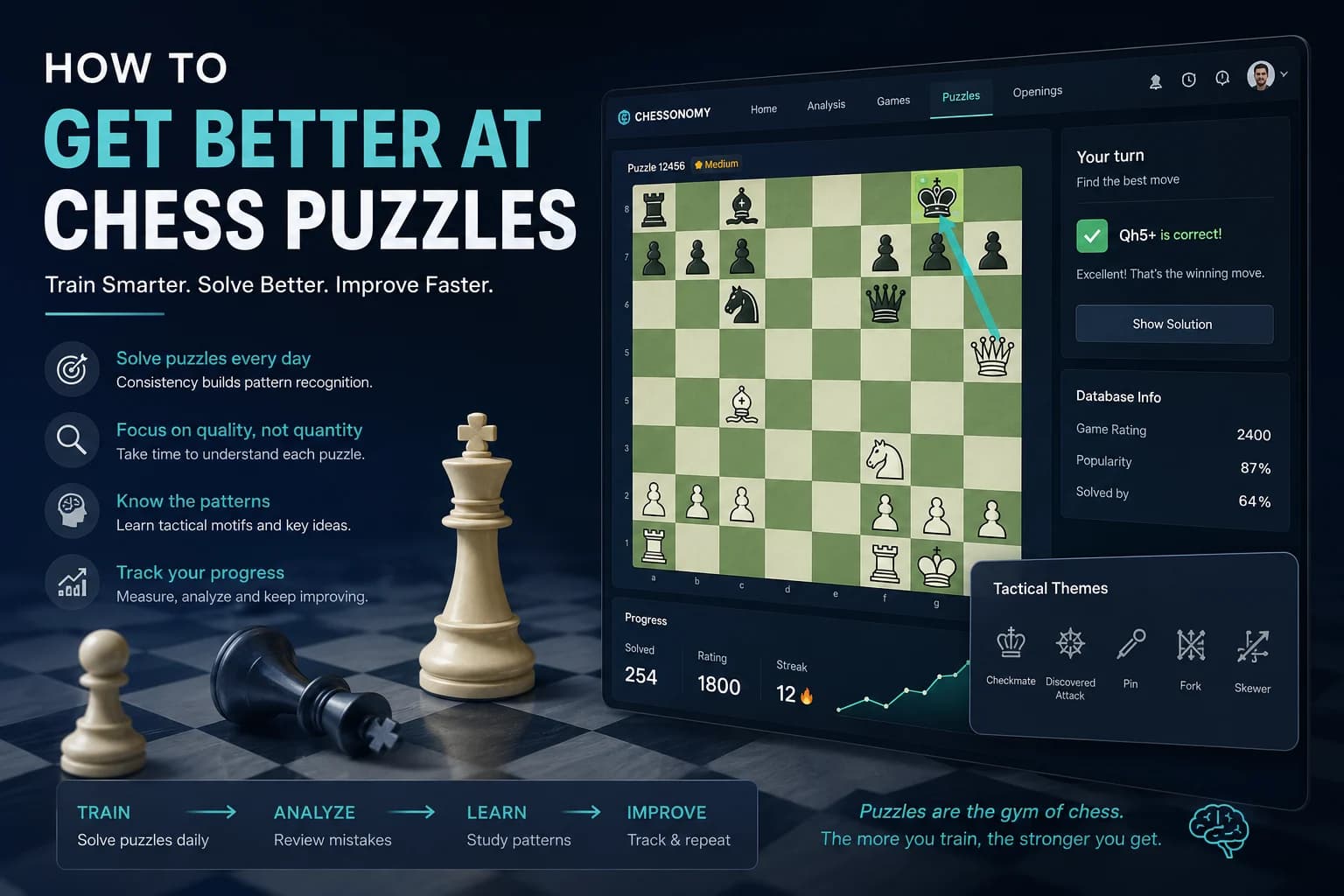
Puzzle improvement comes from accuracy, review, and pattern memory. A smaller set of well-reviewed puzzles beats hundreds of rushed guesses.

Chessonomy is built around a simple training loop: review a game, understand the critical position, then turn the lesson into practice.

Brilliant moves are usually difficult engine-approved tactics, often sacrifices. The label is useful, but different review tools can judge the same move differently.